Android/iOS App Development
Build smooth, reliable Android/iOS apps with clean architecture and API integrations. Optimize for performance, UX, and maintainability.
- Typical timeline
- 10 to 16 weeks to store launch
- Platforms
- iOS and Android, one codebase
- Engagement
- Fixed scope or dedicated team
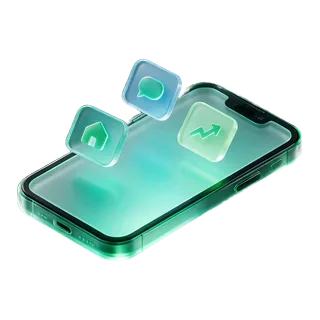
Mobile apps people keep on their home screen.
We build native-quality iOS and Android apps from a shared codebase, so you launch on both stores at once without paying for two separate teams. React Native and Flutter cover most products; when a feature needs Swift or Kotlin, we write that part natively.
A good app is more than screens. We handle the backend it talks to, offline behaviour, push notifications, payments, analytics and the store submission process, including the review guidelines that trip up first-time launches.
After release we watch crash reports and real usage, ship updates over the air where the stores allow it, and keep the app current as iOS and Android change underneath it.

- Brands launching their first iOS and Android app
- Service businesses that need booking, ordering or membership apps
- SaaS products adding a mobile companion to a web platform
- Teams with an existing app that is slow, unstable or hard to update
Everything it takes, in one engagement.
Every part of android/ios app development handled by one senior team, so nothing falls between suppliers and you always know who owns the result.
Cross-platform development
One React Native or Flutter codebase for iOS and Android, with platform-specific polish where it matters to users.
Native modules
Swift and Kotlin for the parts that need it: camera pipelines, Bluetooth, background tasks and deep OS integrations.
App backend and APIs
Authentication, user data, content and business logic served from a secure API we build or connect to your existing one.
Notifications and engagement
Push notifications, deep links and in-app messaging set up to bring people back without annoying them.
Payments and subscriptions
In-app purchases, subscriptions and card payments implemented within Apple and Google's rules.
Store launch and release
App Store and Google Play listings, review submissions, beta testing and automated release pipelines.
- iOS and Android apps live in both stores
- Shared codebase with platform-specific polish
- Backend API and admin panel
- Push notifications and analytics
- Automated build and release pipeline
- Store listing assets and launch support
Tools we trust in production.
Proven, well-supported technology chosen for your product, not for our habits. Everything here is something we run in production.
 React Native
 Flutter
- Expo
 Swift
 Kotlin
 TypeScript
- iOS
 Android
 Firebase
 Node.js
- Sentry
- Fastlane
 GitHub Actions
What this does for your business.
Both stores, one budget
A shared codebase means one team, one roadmap and features that arrive on iOS and Android together.
Smooth on real devices
We test on a range of actual phones, not just the latest flagship, so the experience holds up for every customer.
Updates without drama
Automated releases and over-the-air updates turn shipping a fix into a routine task, not a project.
From first call to shipped.
A planned, transparent arc with something you can see every week, so you always know exactly where the work stands.
Discovery and flows
Week 1We map the core journeys, decide what belongs in version one and agree the platform approach.
Design and prototype
Weeks 2 to 3Native-feeling screens and a clickable prototype you can test on your own phone before development starts.
Build in sprints
Weeks 3 to 12Weekly test builds through TestFlight and Google Play internal testing, so you use the app as it grows.
Beta and store submission
Weeks 12 to 14A closed beta with real users, fixes from their feedback, then store submissions handled end to end.
Launch and maintain
OngoingCrash monitoring, analytics review and regular updates to keep pace with new OS releases.
 Engineering
A fitness studio group launches iOS and Android apps for class booking, memberships and reminders, sharing one codebase and one admin panel with its website so the front desk manages everything in one place.
Talk to us about a project like thisQuestions we hear a lot.
Something else on your mind? Ask Luma in the corner, or reach the team directly.
Ask a questionFor most products, cross-platform gives you both stores for close to the cost of one with no visible difference to users. We recommend fully native only when the app depends heavily on device hardware or platform-specific features.
Explore related services.


Need android/ios app development done right?
Tell us about your project, we'll come back with a concrete plan and timeline.