Full Stack Development
Design & build production-ready web apps with React/Next.js, Node/Express, and MongoDB/MySQL. Create fast, secure APIs and automated deployments.
- Typical timeline
- 8 to 16 weeks to launch
- First demo
- Working build in week 2
- Engagement
- Fixed scope or dedicated team
Web products engineered to carry a business, not just a launch.
We design and build complete web applications: the interface your customers use, the APIs behind it, the database underneath and the admin tools your team runs the business from. One team owns every layer, so decisions about speed, security and cost are made together instead of being negotiated between vendors.
Most of our builds run on React and Next.js with a typed Node.js backend and a relational database, because that combination is fast to develop, easy to hire for and proven at scale. When a project needs something different, we say so and explain why.
You see working software every week, not a reveal at the end. By launch the product is tested, monitored and documented, and the codebase is one your own engineers, or the next agency, can pick up without a rewrite.
- Startups taking a validated idea to a production MVP
- Companies replacing spreadsheets and email with a proper internal platform
- Teams with a working product that has outgrown its first codebase
- Businesses that need customer portals, dashboards or marketplaces
Everything it takes, in one engagement.
Every part of full stack development handled by one senior team, so nothing falls between suppliers and you always know who owns the result.
Product and architecture planning
We turn the brief into user flows, a data model and a technical plan, so scope, cost and timeline are agreed before a line of code is written.
Frontend engineering
Fast, accessible interfaces in React and Next.js, built from a component system so new screens stay consistent and quick to ship.
APIs and backend services
Typed REST or GraphQL APIs with authentication, roles and permissions, background jobs and clean integration points for the tools you already use.
Data and integrations
Relational schemas designed for how the business actually works, plus payments, email, CRM and third-party APIs wired in properly.
Admin and internal tools
Back-office dashboards that let your team manage content, users and orders without asking a developer for every change.
Quality, security and launch
Automated tests, code review, CI/CD pipelines, error monitoring and a security pass before anything reaches real users.
- Production web application
- Documented REST or GraphQL API
- Admin dashboard
- Automated test suite and CI/CD pipeline
- Hosting, monitoring and alerting set up
- Technical documentation and handover session
Tools we trust in production.
Proven, well-supported technology chosen for your product, not for our habits. Everything here is something we run in production.
 React
- Next.js
 TypeScript
 Node.js
 NestJS
- Express
 Tailwind CSS
 PostgreSQL
 MySQL
 MongoDB
- Prisma
 Redis
 GraphQL
- Stripe
 Docker
- Vercel
What this does for your business.
A platform you own outright
Clean, typed, documented code in your repository, with no proprietary lock-in and no black boxes.
Speed your users notice
Server rendering, sensible caching and lean pages so the product feels instant on real devices and real networks.
Room to grow
An architecture that handles more users, more features and more developers without starting again.
From first call to shipped.
A planned, transparent arc with something you can see every week, so you always know exactly where the work stands.
Discovery
Week 1Workshops to map users, flows and constraints. You leave with a scoped plan, an architecture outline and a realistic estimate.
Design and foundations
Weeks 2 to 3Key screens are designed while we set up the repository, environments, CI/CD and the core data model.
Build in sprints
Weeks 3 to 12Features ship in weekly increments to a staging environment you can click through, with a demo at the end of every week.
Harden and launch
Final 2 weeksLoad, security and acceptance testing, then a planned release with monitoring and rollback ready.
Support and iterate
OngoingA warranty period for fixes, then optional ongoing development as real usage tells us what to build next.
 Engineering
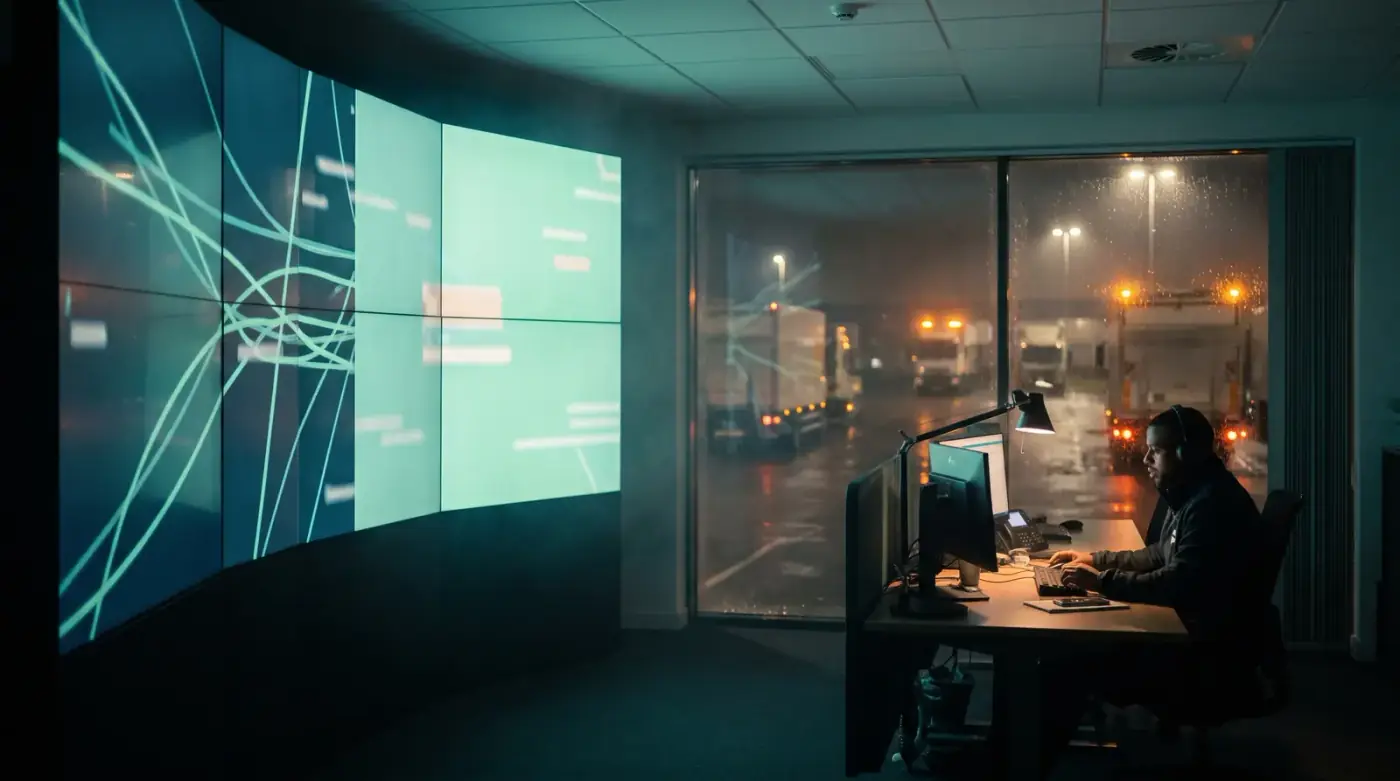
A logistics company replaces spreadsheets and email threads with a dispatcher dashboard and customer portal: live order tracking, role-based access for staff and partners, and an API its warehouse systems plug straight into.
Talk to us about a project like thisQuestions we hear a lot.
Something else on your mind? Ask Luma in the corner, or reach the team directly.
Ask a questionYes. The code lives in your repository from day one and all intellectual property transfers to you on payment. We do not use proprietary frameworks that tie you to us.
Explore related services.

Need full stack development done right?
Tell us about your project, we'll come back with a concrete plan and timeline.